
HydraFacial vs Microneedling: What's the Difference, and Which One Is Right for You?
"Which one should I have — HydraFacial or microneedling?" is one of the questions we field most often, particularly from clients who are new to clinical skin treatments. The two are often spoken about in the same breath, but they do very different things to the skin and answer very different concerns.
The short answer is that HydraFacial works on the surface and microneedling works structurally. The right starting point depends on what you want from the treatment. The longer answer is below.
What HydraFacial does
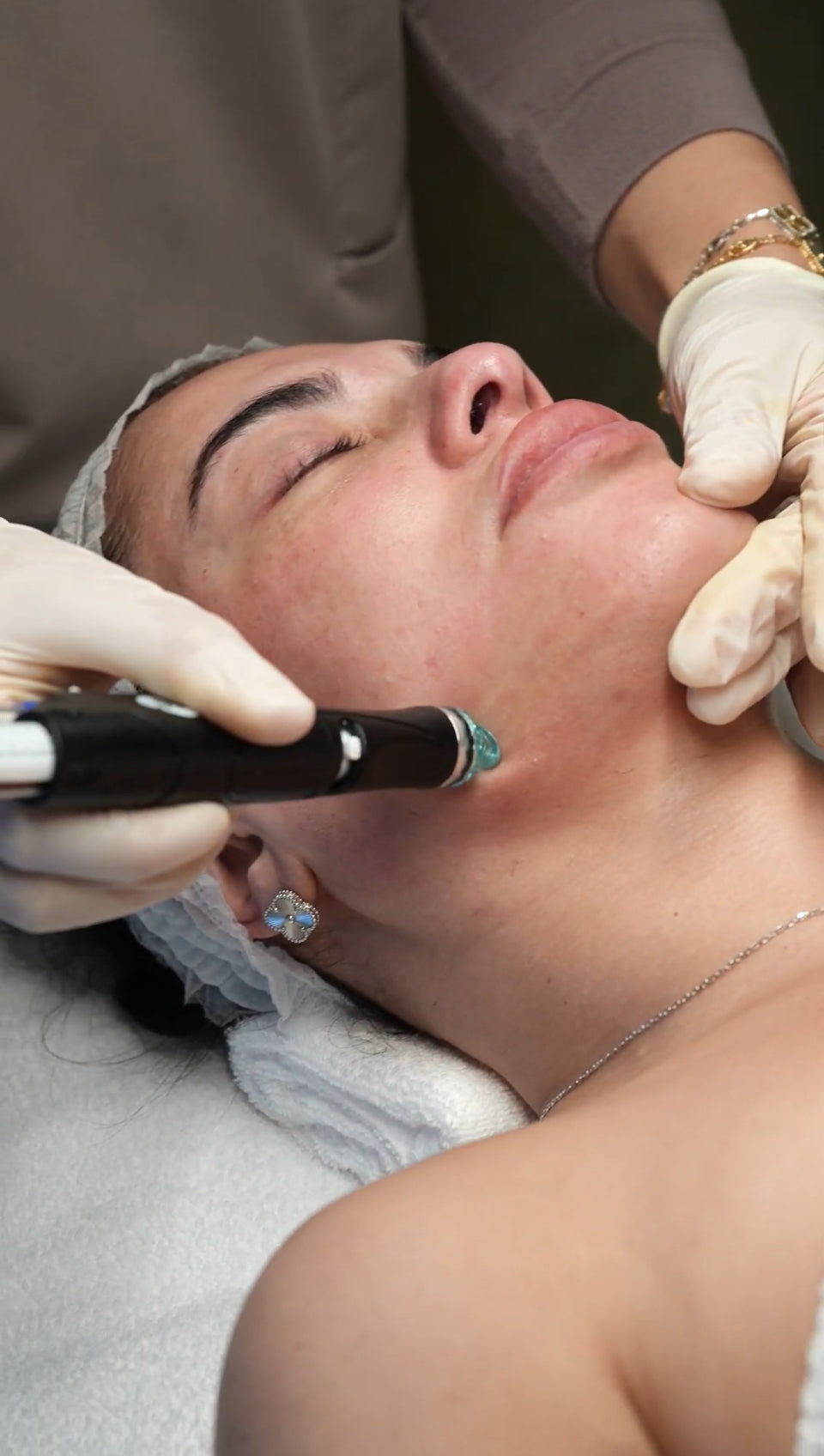
HydraFacial is a multi-step machine treatment that uses a specialised tip to deliver three things at the same time: gentle exfoliation, controlled vacuum extraction of debris from the pores, and infusion of hydrating or brightening serums into the freshly cleansed skin. The whole appointment takes about 45 minutes and is one of the most comfortable treatments we offer.
It is the closest thing we have to an instant glow. Skin looks brighter, fresher, and more even straight after the appointment, and the effect holds for about three to four weeks before the cycle would benefit from being repeated. We use it for clients who want low-commitment, regular skin maintenance, or who need a real glow ahead of an event.
What HydraFacial does not do is rebuild collagen or treat structural concerns like scarring, deep lines, or loss of firmness. It is a surface treatment with surface results. See our full HydraFacial page for the protocol.
What microneedling does
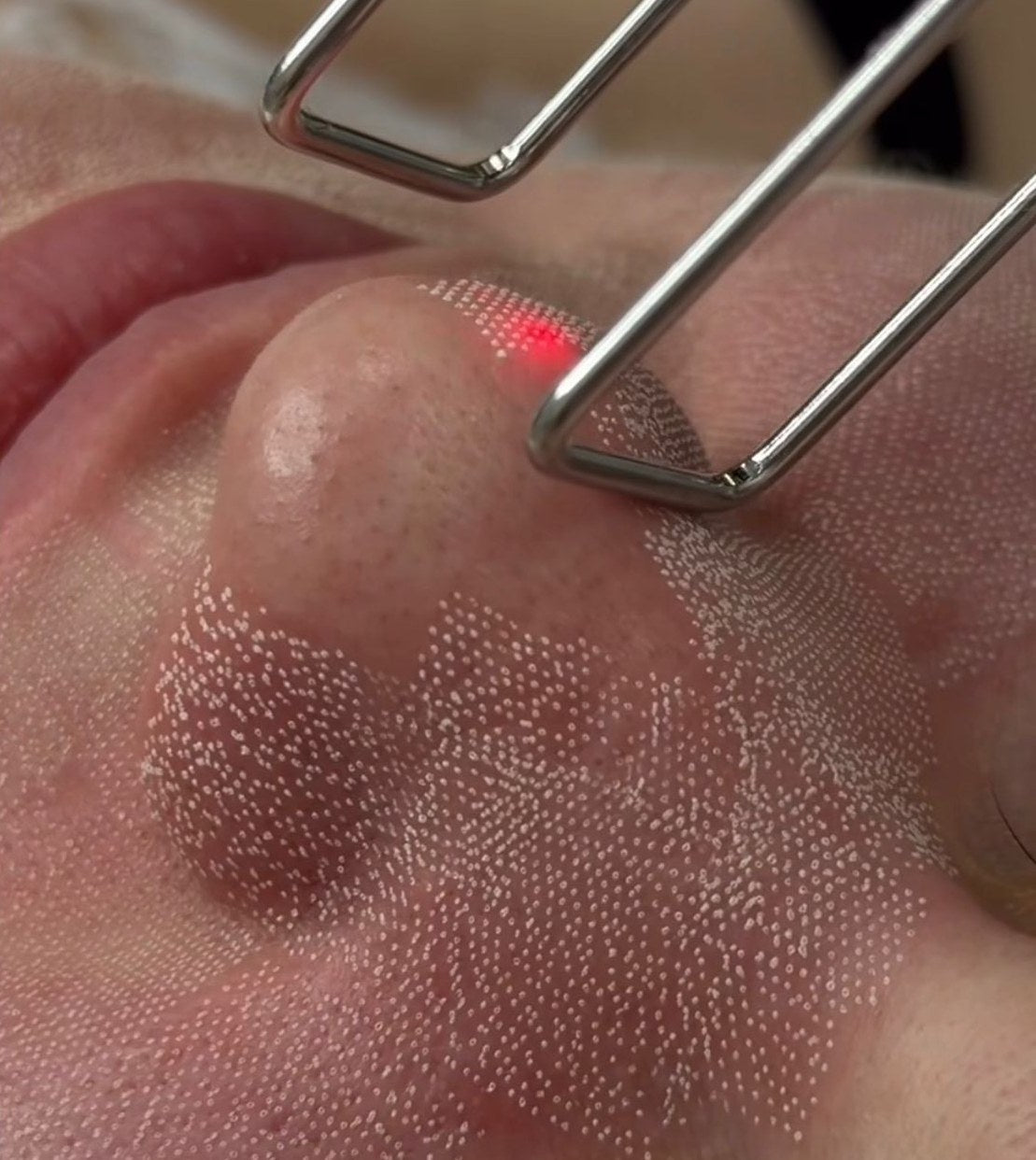
Microneedling is a different category of treatment entirely. A small pen with a cluster of fine surgical needles creates thousands of controlled micro-channels in the skin. These channels close within hours, but the body interprets them as injury and responds with a 12-week cascade of new collagen and elastin production.
The result, over a course of three to six sessions, is structurally improved skin: firmer, smoother, less scarred, with smaller-looking pores and a generally healthier surface. It is the strongest single tool we have for actual skin remodelling, particularly for acne scarring, texture concerns, and ageing skin where the goal is real collagen support.
What microneedling does not deliver, on its own, is instant glow. The surface looks slightly fresher straight away but the meaningful results develop over weeks. See our full microneedling page.
The key difference, in one line
HydraFacial improves how your skin looks today. Microneedling improves what your skin is made of, over months.
What each treatment is best for
HydraFacial is a good fit if your main concerns are:
- Dullness or tired-looking skin.
- Dehydration and surface roughness.
- Congestion, blackheads, or oily skin needing regular extractions.
- Pre-event glow when you need to look fresh in three days.
- Maintenance — you have healthy skin and want to keep it that way.
- Sensitive or reactive skin that may not tolerate stronger treatments.
- First-time clients who want to start gently.
Microneedling is a better fit if your main concerns are:
- Acne scarring, particularly atrophic (indented) scars.
- Visible texture changes, including enlarged pores.
- Loss of firmness or early signs of ageing.
- Stretch marks (we offer microneedling for the body too).
- Long-term structural skin investment over six to twelve months.
- Stubborn pigmentation that has not responded to topicals.
There is overlap on conditions like dullness and uneven tone — both can help. The question is whether you want surface improvement now or structural improvement later.
What each treatment feels like
HydraFacial feels like a gentle vacuum being moved across your skin, with warm serums applied at intervals. There is no needle, no scratching, no real sensation beyond the soft suction. Most clients rate it 1-2 out of 10 for discomfort.
Microneedling involves numbing cream applied first, then the pen moving across the face for about 20 minutes. The sensation is described as a light vibration with mild prickling, particularly around the bonier parts of the face like the forehead and jawline. Most clients rate it 3-4 out of 10.
Downtime and recovery
HydraFacial. No downtime. Some clients have a barely-pink flush for an hour or two after the appointment. Makeup is fine the same day. You can go straight back to normal activities.
Microneedling. Skin looks pink and flushed for 24 hours, similar to a mild sunburn. Some clients develop very fine flaking on day two or three, particularly across the nose and forehead. You can return to work and normal activities the next day. Makeup is fine from day two.
For both, sunscreen is non-negotiable for the week after. For microneedling, we also ask you to skip retinols and strong acids for five days.
When do you see results?
HydraFacial: the glow is visible immediately and peaks at day two. By week three to four the skin starts to look slightly less luminous and the treatment can be repeated.
Microneedling: the surface looks slightly fresher straight away, but the meaningful improvements develop between weeks four and 12. This is because collagen production peaks around six weeks after each session.
This is the biggest practical difference. If you have an event in five days, you want HydraFacial. If you have an event in five months, you might start a microneedling course now.
How they fit together in a treatment plan
For most clients in their 30s to 50s with mixed concerns, the strongest approach is to use both in rotation rather than choosing one. A pattern we run regularly in clinic is:
- Month 1: microneedling for the structural work.
- Month 2: HydraFacial to maintain the surface in between.
- Month 3: microneedling again.
- Month 4: HydraFacial.
- Continue for the duration of the microneedling course (usually three to six sessions over six to twelve months).
This combination gives you the rebuild from microneedling plus the visible glow from HydraFacial throughout. We also occasionally combine them with Salmon DNA microneedling for clients who want faster surface results alongside collagen induction. See our earlier guide: microneedling vs salmon DNA microneedling.
Which one is right for you?
If you are new to clinical skin treatments and your skin is generally healthy but tired, dull, or dehydrated, HydraFacial is the right place to start. The recovery is none, the result is immediate, and it tells you how your skin reacts to clinical work.
If you have specific structural concerns — acne scarring, deep texture, real loss of firmness — microneedling is the right tool. Plan a course of three to six sessions and trust the 12-week timeline.
If you are between the two and not sure, book a consultation. Twenty minutes with one of our therapists is more useful than reading about it. We will look at your skin properly and recommend a plan based on what your skin actually needs.
Visit us in Essendon
Book a treatment or call us on 0450 000 083 to talk through your options. Both treatments are performed by senior therapists with significant experience in advanced skin work.
Aura Skin Boutique
154B Keilor Road, Essendon North VIC 3041
Monday to Saturday 10am to 7pm. Sundays by appointment.
Frequently asked questions
Can I have HydraFacial and microneedling in the same appointment?
No, and we would not recommend it. Both treatments work on the skin's surface in different ways and combining them in one session over-treats. We routinely book them in alternating months — HydraFacial one month, microneedling the next — which is more effective than doing both at once.
How do I know which one to start with?
If your skin is dehydrated, dull, or you've never had a clinical treatment, start with HydraFacial. If you have specific structural concerns like acne scarring, visible texture, or loss of firmness, start with microneedling. A 20-minute consultation in clinic will tell us more than reading can.
How often should I have each treatment?
HydraFacial is safe monthly and many of our clients book on a four-week rhythm. Microneedling needs more space between sessions, typically four to six weeks, because the collagen response continues working for around 12 weeks after each session.
Which one is better for ageing skin?
Microneedling is the stronger structural tool for ageing concerns because it stimulates new collagen and elastin. HydraFacial supports the surface — hydration, tone, brightness — which makes ageing skin look healthier but does not rebuild it. Most of our clients in their 40s and 50s use both in rotation.
Which is better for acne scarring?
Microneedling is significantly better for acne scarring. The micro-channels stimulate the skin to rebuild the affected tissue, which over a course of six to eight sessions can produce meaningful improvement in indented scars. HydraFacial helps with active congestion and breakouts but does not address scarring.
Will microneedling hurt more than HydraFacial?
Yes, somewhat. HydraFacial feels like a gentle vacuum and a warm flannel — most clients rate it 1-2 out of 10 for sensation. Microneedling, even with numbing cream, feels like a light vibration with prickling, particularly around the bonier parts of the face. Most clients rate it 3-4 out of 10.
Can I have either treatment while pregnant?
HydraFacial is generally safe during pregnancy with a modified serum selection — we leave out the salicylic acid step. Microneedling is not recommended during pregnancy. We discuss medical history and any current pregnancy at booking.
Are they safe for sensitive skin?
Both can be adjusted for sensitive skin. HydraFacial is gentler by default. For microneedling we use a shallower needle depth on first sessions for sensitive skin types and build up only if your skin tolerates it well. Always raise any sensitivities at consultation.
Book a free skin consultation
Not sure which treatment is right for you? Our therapists will look at your skin and recommend the best option, plan or package for your goals.